What if the most beautiful material for a new garment came from an existing one?
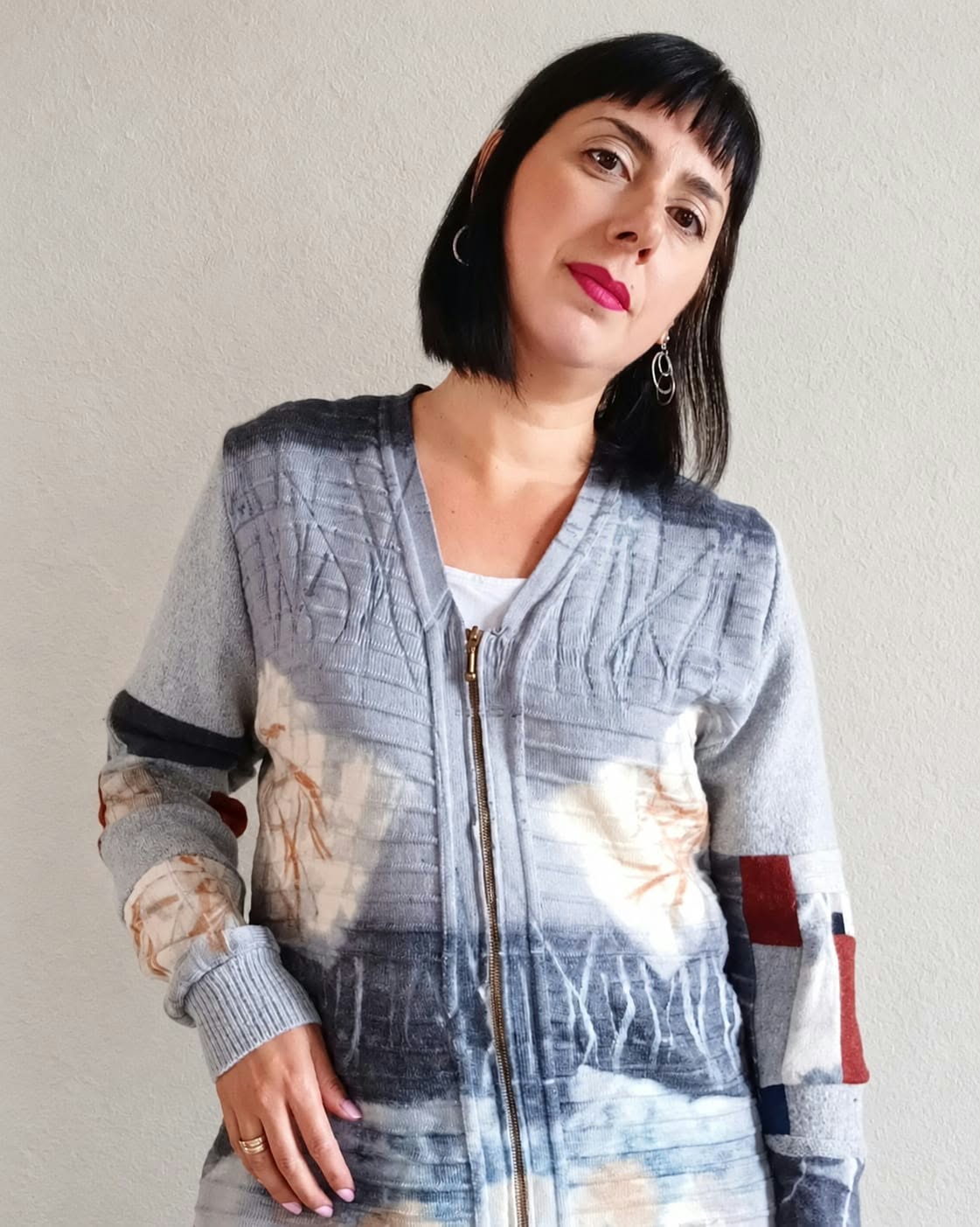
For Melissa Ferreira Schwager, founder of Adhesif Clothing, reclaimed textiles offer a rich palette of colour, texture and pattern in her work. A vintage wool, linen or silk might spark a design, while techniques such as patchwork, eco-printing and natural dyeing add further colour, texture and layers of detail to each piece.
Founded in Vancouver in 2003 and now based outside Frankfurt, Germany, Adhesif Clothing brings together Melissa’s eye for distinctive textiles and her commitment to quality craftsmanship. She creates one-of-a-kind garments to be worn, enjoyed and valued, bringing together distinctive design and lasting craftsmanship.
In our first Practice Profile, Melissa shares insights from her years of experience as an upcycling designer, sharing the skills, challenges and everyday decisions that have come to shape her work.
Your Practice + Location
Please introduce yourself, your practice or business, and where you are based.
I am a self-taught artist, designer, and textile artist with 23 years of experience creating one-of-a-kind pieces through upcycling, handcrafted textiles, and zero-waste processes. My practice is rooted in sustainability, individuality, and a hands-on approach to making, with each piece conceived and crafted entirely by hand.
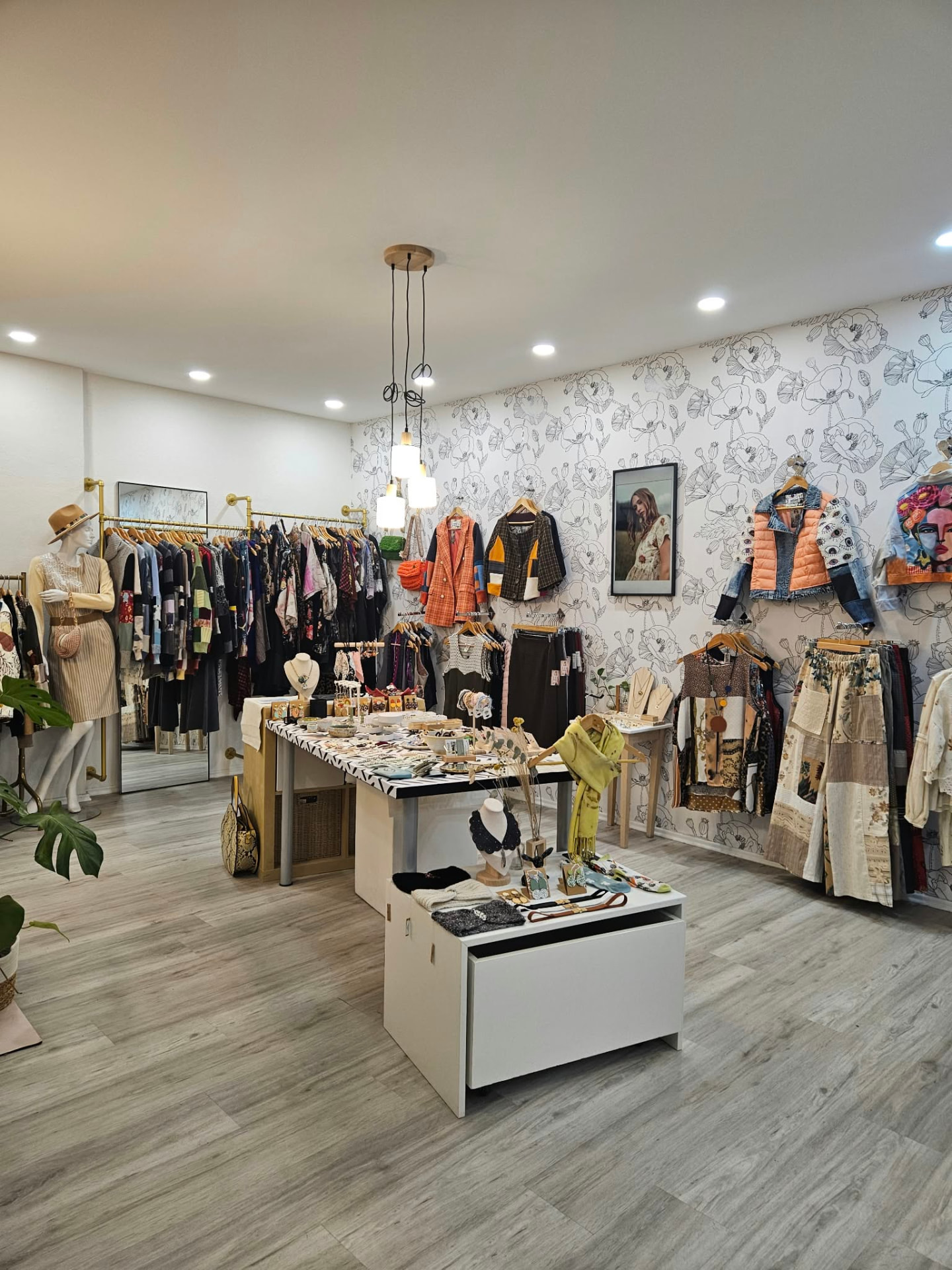
Originally from Montreal, Canada, I founded Adhesif Clothing in Vancouver in 2003. Since 2020, I have been based just outside Frankfurt, Germany, where I opened my own atelier on our property two years ago. The space brings together a showroom and retail area, open three days a week, and a dedicated working studio next door, where I personally create each piece from start to finish.
Materials + (Re)sourcing
What materials or waste stream do you work with?
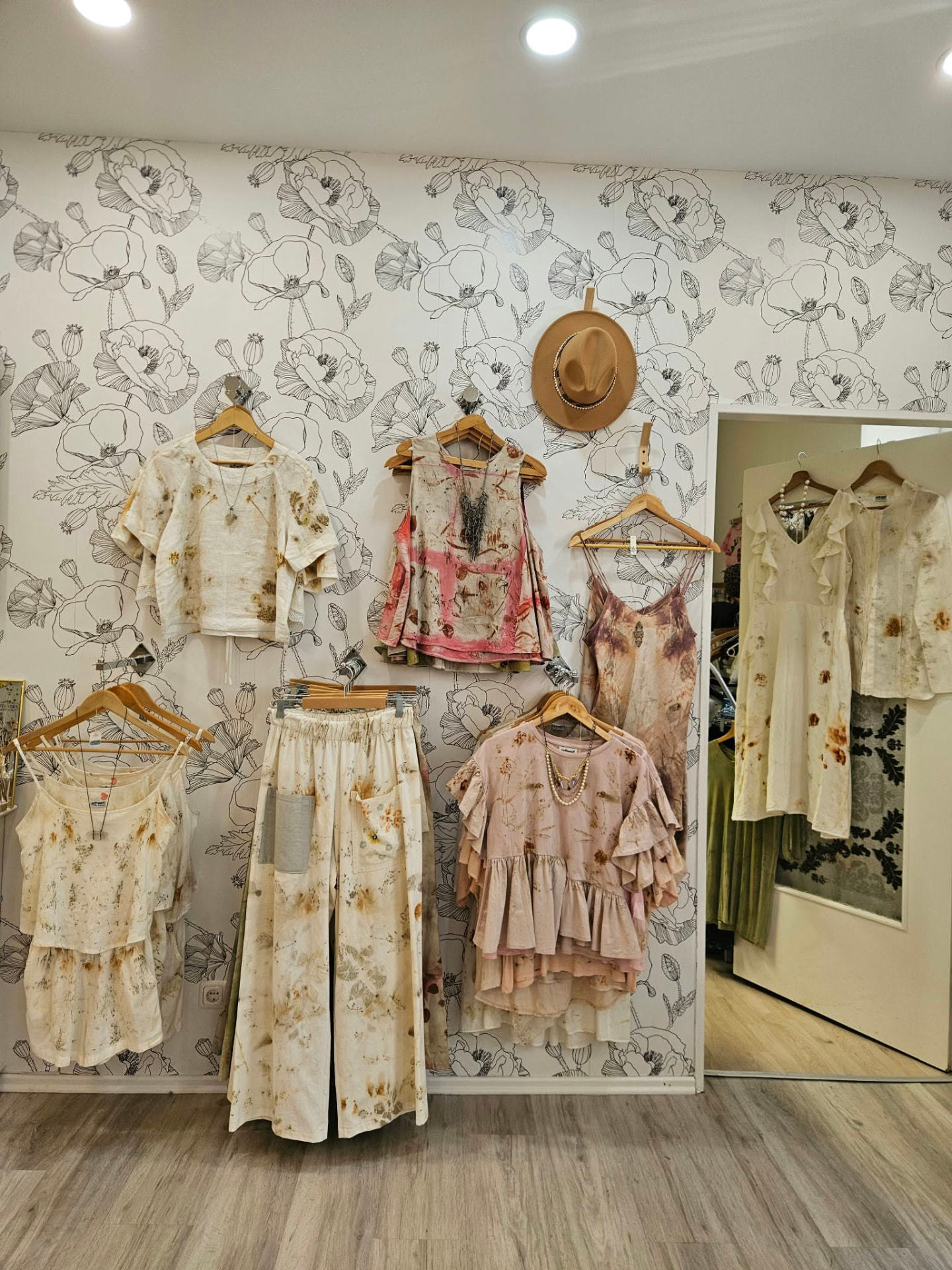
I work primarily with reclaimed and vintage textiles, with a particular focus on natural fibres such as wool, linen, cotton, and silk. These materials are especially suited to my current practice of botanical printing and natural dyeing. My approach to working with textiles is much like painting with fabric, requiring an extensive and carefully curated palette of colours, textures, and patterns.
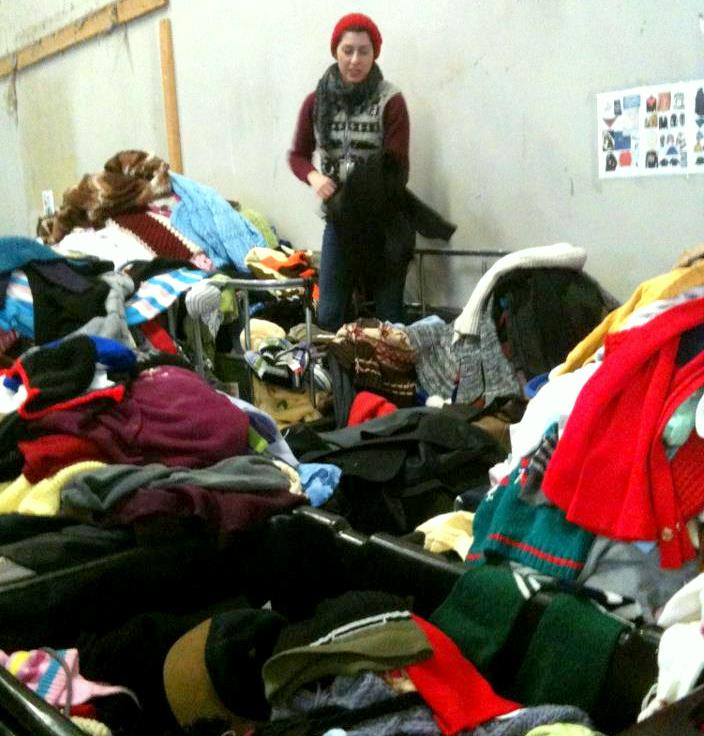
Over the past two decades, I have sourced materials through various channels, including working as a vintage clothing buyer in textile rag yards, where I hand-selected and purchased textiles by weight. Much of this collection remains in my inventory today. I continue to source selectively through second-hand and vintage shops, online platforms such as Vinted, and independent shops and thrift stores in Canada when visiting family and friends.
My priority is to work with reclaimed and second-hand materials wherever possible, avoiding new textiles entirely. The only exceptions are essential supplies, such as sewing thread, required to construct and finish my pieces.
How do you (re)source the materials you acquire?
I personally source all my materials, both online and in person, through platforms such as Vinted and second-hand and vintage shops. With my background as a vintage clothing buyer and over two decades of experience working with textiles, I have developed a trained eye for identifying the specific fibres, weights, textures, and qualities I look for. Sourcing often involves countless hours of searching, but it is a process I genuinely enjoy—almost like a treasure hunt for beautiful, unique materials.
Although I am frequently offered textile donations, I prefer to source everything myself, as my work requires very specific materials and qualities. This hands-on approach allows me to maintain a carefully curated collection of textiles suited to my design practice, ensuring that each material has a purpose within my work.
What do you look for when assessing a textile, garment or material?
Quality and durability are always my starting points, particularly when sourcing natural fibres such as wool and denim that will stand the test of time. I create what I like to call heirloom pieces, with significant time and craftsmanship invested in each one, so I want the finished work to last a lifetime and ideally be passed down through generations. I generally avoid excessive use of synthetics wherever possible.
Beyond quality, my assessment is highly project-dependent. I look at each textile in its entirety, considering its pattern, texture, colour, and potential, rather than ruling it out because of imperfections. Sometimes a particular textile inspires an entirely new design idea. Aesthetics can also be transformed through natural dyeing, surface design, and patchwork, allowing me to adapt materials to suit the vision of each piece.
What happens before re-making begins? (ie/ sorting, cleaning, storing, deconstructing, mending, documenting, etc.)
Preparation is very project-dependent and begins with cleaning the textiles, followed by any necessary treatments, such as mordanting cellulose fibres in preparation for botanical printing or natural dyeing. I carefully sort and store my reclaimed materials by category—linen, denim, wool, and so on—so I can easily access what I need for each project.
My workflow is also seasonal, with botanical printing and natural dyeing taking priority from late winter through summer and into early autumn, before I shift towards heavier winter textiles such as wool and denim. Each piece is approached individually, depending on its intended use and the materials involved. Documentation typically takes place through editorial photoshoots, with selected pieces subsequently featured in fashion magazines and added to my online shop.
Process + Skills + Labour
What does your upcycling, re-making or reuse business process involve?
Over the past 23 years, Adhesif Clothing has evolved through several incarnations. I originally handled every aspect of production myself, from sourcing and preparing textiles to deconstructing garments, drafting original patterns, cutting, and constructing each piece. I use industrial sewing machines to ensure durability and a high-quality finish.
During my seven years operating a retail store in Vancouver, Canada, I expanded my production and worked with a small team of five, including home sewers and other creative professionals. Since relocating to Germany, I have returned to a more grassroots, largely solo operation, managing nearly every aspect of the business myself, with occasional support from a local home sewer.
Today, my focus is firmly on quality over quantity, vintage redesign, and thoughtful garment reconstruction. This hands-on approach allows me to give each piece its own identity, from the initial design concept through to its final aesthetic and finish, ensuring that every creation is truly one of a kind.
Which techniques, tools or skills are central to your work?
My work combines a range of textile techniques, including botanical printing, natural dyeing, shibori, silk screening, appliqué, embroidery, and hand stitching. Zero-waste patchworking has been central to my practice since day one and remains a signature element of my design aesthetic. I’m particularly drawn to layered textiles that reveal more detail and tell a story the longer you look at them. In recent years, I’ve continued to expand my skills through self-directed experimentation with botanical printing and natural dyeing on reclaimed natural fibres.
I construct my garments using industrial sewing machines, which I’ve worked with since the beginning. I learned to sew on these machines with the help of my mother, who worked in garment factories in Montreal. Interestingly, my machines have travelled with me from Montreal to Vancouver and eventually to Germany.
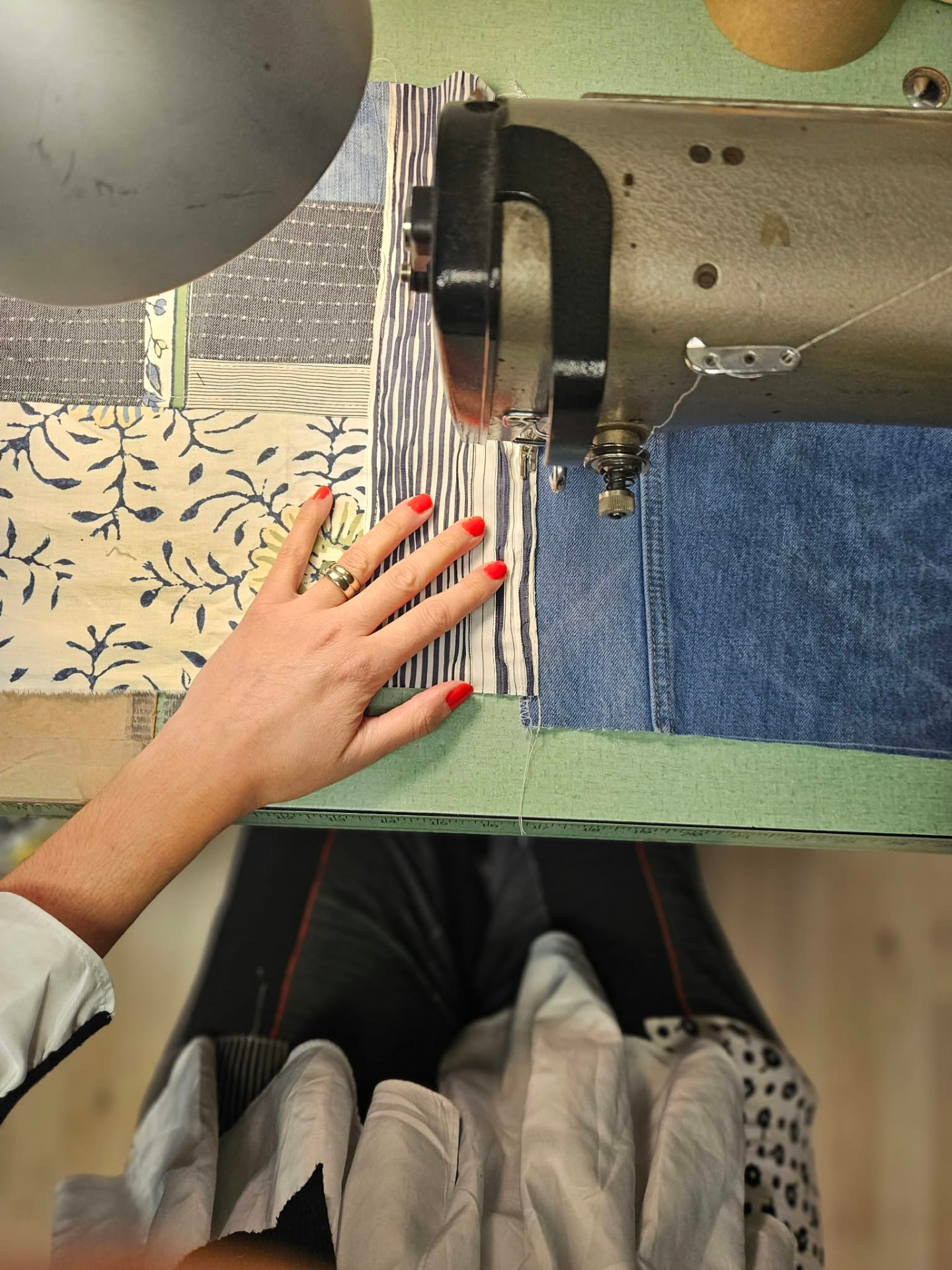

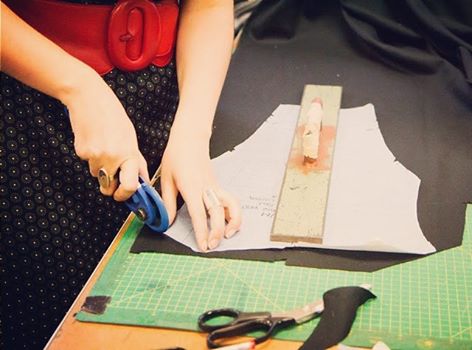
My essential tools include rotary cutters, industrial shears, X-Acto blades for carefully deconstructing garments, measuring tapes, chalk, paper and tape for pattern drafting, and weights and pins for securing fabrics during construction. Thread and embroidery thread are also integral to my process, particularly for hand-finishing details and securely attaching buttons for added durability.
Equally important is my ability to understand and work with vintage textiles, recognising how older fabrics behave and how best to incorporate them into new designs. Developed through decades of sourcing and working with reclaimed materials, this knowledge informs everything from garment construction to visible mending and repair.
What parts of your work are least visible to customers, clients or audiences?
Much of the work that goes into each piece happens behind the scenes, from the ongoing repair and care of textiles to cleaning, deconstructing, and preparing reclaimed materials for reuse. The actual construction process also involves a significant amount of time, skill, and craftsmanship that isn’t always visible in the finished piece.
I do share glimpses of my process through Instagram Stories to give people a more authentic connection to my work, but ultimately, customers tend to see the finished garment rather than the many hours of hands-on work, problem-solving, and attention to detail that go into creating it.
Value + Pricing + Viability
How do you think about pricing your work, especially when materials may be low-cost but labour is high?
Pricing is something I’ve spent decades refining, and it remains an ongoing balancing act between the time, craftsmanship, and artistry involved in each one-of-a-kind piece and the desire to keep my work accessible. While reclaimed materials may be relatively inexpensive, the labour involved is substantial, and I believe my work is still modestly priced for the level of craftsmanship and individuality it offers.
Accessibility has always been important to me. I don’t want sustainable fashion and upcycling to be reserved for the wealthy; I want my pieces to be worn, enjoyed, and lived in. I also offer a layaway option, allowing customers to place a deposit and pay the remaining balance within a month.
“I don’t want sustainable fashion and upcycling to be reserved for the wealthy; I want my pieces to be worn, enjoyed, and lived in.”
With rising operating costs and increasing pressure on the value of skilled labour, I’ve focused on keeping overheads as low as possible. Running my atelier from home, opening to the public three days a week, and handling nearly every aspect of production myself allows me to maintain a balance between the work each piece requires and keeping it attainable for a broader audience. Ultimately, I want to create lasting, individual pieces that people can genuinely afford to own and enjoy.
How do you communicate or defend the value of upcycled, repaired or re-made work?
I don’t feel the need to defend the value of my work; after 23 years of honing my craft, I’m confident that the quality, originality, and craftsmanship speak for itself. My pieces are professionally constructed, highly considered, and entirely handmade, and I find that customers often develop an even greater appreciation for them when they learn that I create everything myself. If someone questions my pricing, I simply explain that it reflects the time and craftsmanship required to produce each piece. Ultimately, I believe there comes a point in your career when experience gives you the confidence to stand behind your work without having to justify it. I want my pieces to be worn and enjoyed, and I trust that the right customer will recognise their value. For me, it’s about knowing what my work is worth and allowing the work itself to communicate that.
Networks + Systems + Community
Who do you collaborate with—other artists or designers (or creative disciplines), suppliers, repairers, re-manufacturers, community groups/non-profit/charity, educators or other re-makers?
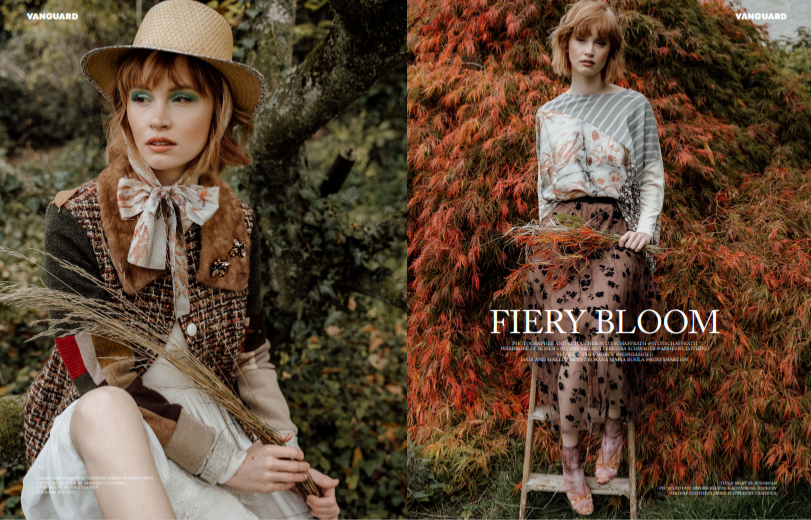
I love creative collaboration and regularly work with like-minded creatives on editorial photoshoots, combining my work as a designer with my experience as a professional stylist to develop editorials for international fashion publications. I find the collaborative process incredibly rewarding and enjoy bringing creative projects to life. My latest autumn editorial and collection launch are available to view on my website.
Beyond my creative work, I have been a monthly donor to Charity: Water for several years. Access to clean water is something I feel strongly about, particularly given the environmental impact of the fashion industry. I believe in giving back whenever possible and recognise the importance of the support and opportunities that others have contributed to my own journey.
As I personally manage the sourcing, design, construction, repair, and remanufacturing aspects of my business, I currently work largely independently. I would love to explore community-based projects and workshops in the future, although, as a mother of two young children, maintaining a healthy work-life balance is also a priority. I remain open to opportunities that align with my values and allow the right balance of time and creative energy.
What local reuse infrastructure makes your work possible?
I’m encouraged by how secondhand sourcing has evolved, especially through online resale platforms that make reclaimed textiles and pre-loved materials more accessible. Since I started my business in 2003, these opportunities have opened a new world of possibilities for independent designers and textile artists.
As secondhand shopping becomes mainstream, I hope people will instinctively seek pre-loved alternatives before buying new, making reuse a natural first choice rather than an afterthought.
What is missing in your area or sector?
What’s missing in my sector is the Upcycling Atlas: an inspiring global directory of upcyclers, remakers, visible menders, repairers, and DIYers. It’s a fantastic initiative, and I’m excited to see how it develops. Thank you for inviting me to be the first spotlight in the directory!
What would help your practice or local reuse system become stronger?
What would help strengthen my practice and local reuse system is greater visibility, connection, and access to shared knowledge. In my sector, what’s currently missing is the Upcycling Atlas: an inspiring global directory of upcyclers, remakers, visible menders, repairers, and DIYers.
An initiative like this could make existing practices more visible, connect people working in different places, and showcase the breadth of creative reuse already happening. It could also encourage collaboration, learning, and participation by helping people discover practitioners, projects, and practical examples they might not otherwise encounter.
Greater access to local and mainstream media would also be incredibly valuable. More opportunities to share the stories of individuals working in sustainability, upcycling, repair, and reuse could help bring these practices into wider public awareness. It would be wonderful to see more features, interviews, and storytelling, as well as opportunities to organise fashion shows, exhibitions, and other public events that celebrate creative reuse and give these practices greater visibility.
Educator and speaker series could also play an important role, particularly if honorariums were available for creative individuals to share their experiences, skills, and knowledge. Supporting practitioners in this way would make information more attainable to mainstream audiences while recognising the value of the work and expertise already present in these communities.
I think this kind of platform is especially valuable because it presents reuse not only as an environmental necessity, but also as a creative, skilled, and community-driven practice. By documenting and celebrating the people doing this work, the Atlas could strengthen local networks while contributing to a broader global movement.
Learning + Future Reuse
How do you think about longevity, repairability or the future reuse of materials in what you make?
Working with vintage and reclaimed textiles requires a trained eye for age-related wear, fragility, and structural integrity. There’s little value in investing countless hours of craftsmanship into a piece if the underlying textile cannot withstand the test of time. Longevity is therefore a key consideration in my design process, and I’m always open to discussing repair work when needed.
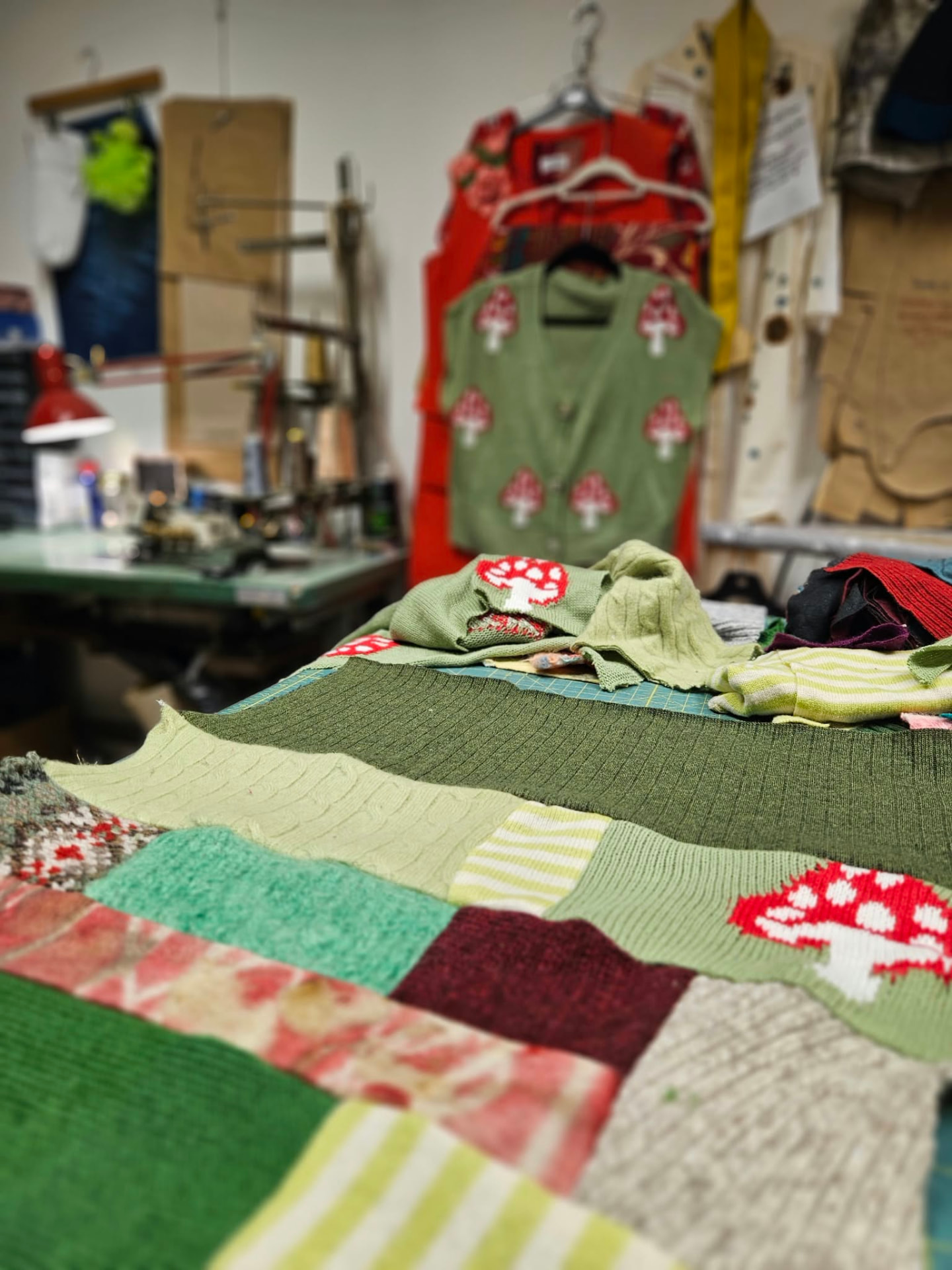
For me, the value of upcycling lies not simply in the material itself, but in the artistry, skill, and labour invested in transforming it into something new. I believe repair should also be a much more integral part of how we consume, encouraging people to consider restoring and extending the life of their belongings rather than discarding them, particularly when it comes to well-made, valuable pieces.
What advice would you give someone beginning to work as a re-maker or starting a reuse business?
My advice would be to develop your own unique aesthetic and approach rather than following trends or looking at what everyone else is doing. Step away from Pinterest and allow yourself to think independently. Approach discarded textiles and materials as valuable resources, considering their potential beyond their original purpose and how you can transform them into something more functional, desirable, and enduring.
“Step away from Pinterest and allow yourself to think independently. Approach discarded textiles as valuable resources.”
Document your ideas, experiment with techniques, and focus on developing a distinctive design language supported by quality craftsmanship. For me, the true value of upcycling lies in creating something of significantly greater value than the material you started with. Simply cutting up a garment and reassembling it without considering durability or construction does a disservice to the practice. Remaking should be about thoughtful design, originality, and creating pieces that are built to last. Don't follow the herd; strive to make something genuinely unique and exceptional.
“For me, the true value of upcycling lies in creating something of significantly greater value than the material you started with.”
What story, material, place or practice would you like the Upcycling Atlas to document next?
I would love to see the Atlas document the cultural roots of reuse, particularly in places such as India, where repurposing and reselling materials can be an everyday practice born out of necessity. I think there is so much to learn from communities that have long understood the value of making use of what is available, beyond the current focus on upcycling as a fashion or design trend.
“There is so much to learn from communities that have long understood the value of making use of what is available.”
I’m also fascinated by the potential of industrial design and large-scale material reuse, from transforming discarded denim into building insulation to developing construction materials and sculptural forms from textile waste. With the enormous volume of discarded textiles already in existence, I would love to see more stories exploring how these materials can be treated as valuable resources for construction, design, and other practical applications. Documenting these approaches could broaden our understanding of upcycling and inspire more innovative, resourceful ways of thinking about waste.
Call to Action
Do you have a Call to Action or any relevant projects, exhibitions, workshops etc. you would like to share?
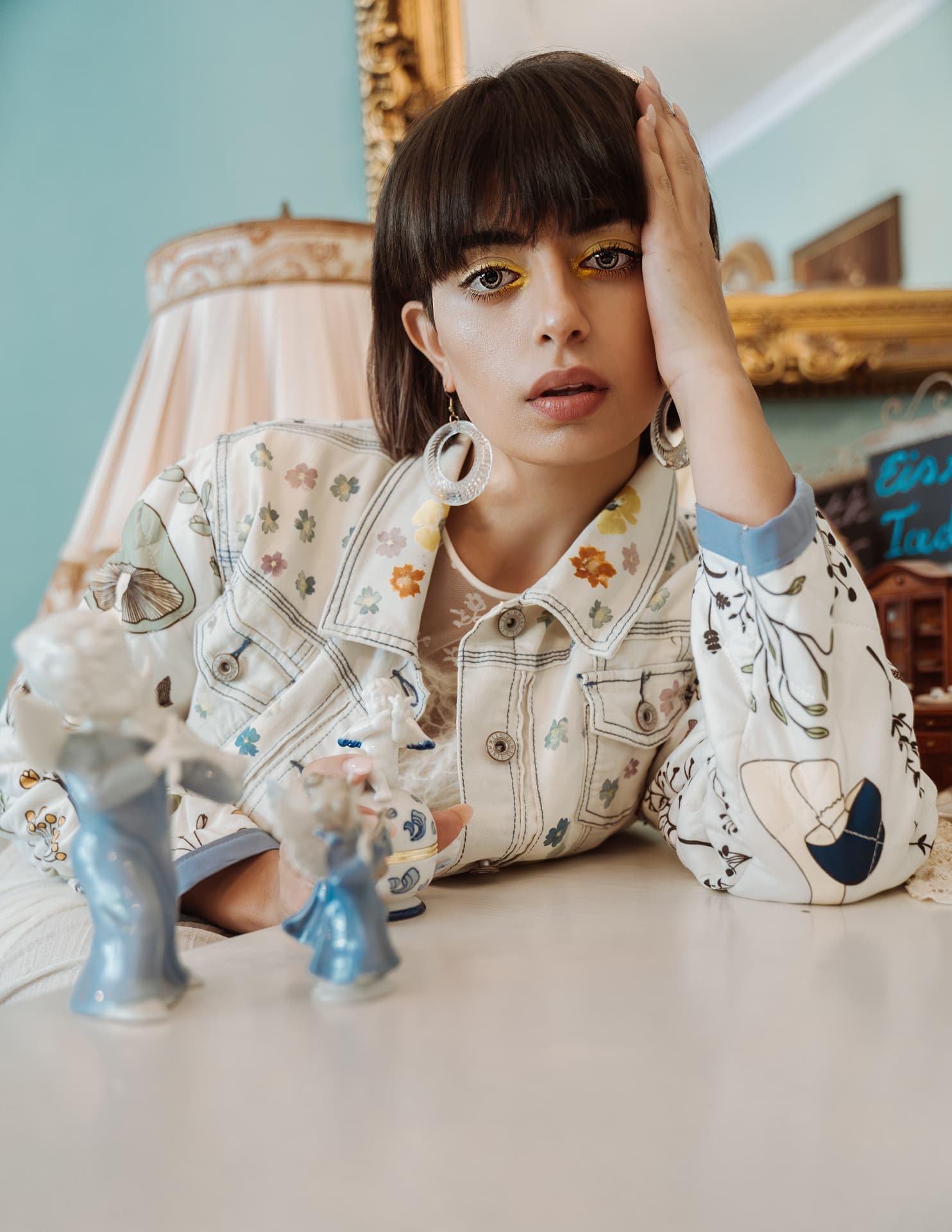
I’ve just launched a limited Autumn Mini-Series titled La Dolce Far Niente, featuring eight one-of-a-kind upcycled pieces, now available to view online at www.adhesifclothing.com.
The accompanying editorial will also be featured in New York’s Vanguard Magazine next month, so stay tuned for updates via the website and Instagram @adhesifclothing.
Visitors are welcome to explore and try on the collections in person at my atelier at Hauptstrasse 16, 61462 Königstein im Taunus, Germany. Appointments can be arranged by phone or email, both of which are listed on our website.
Looking ahead, I’m also hoping to organize a solo fashion show in Frankfurt, Germany, next October. Follow along on Instagram for announcements and updates as plans develop.
Connect with Adhesif Clothing
Website: adhesifclothing.com
Instagram: @adhesifclothing
Email: info@adhesifclothing.com
Explore Melissa’s full Practice Profile on the Upcycling Atlas to discover more about her materials, making process, and approach to creative reuse.
Open related link